
Enterprise Risk Management
Enterprise Risk Management - supporting better decisions
Enterprise Risk Management helps organisations understand, manage and make informed decisions about risk. When applied effectively, it provides clarity on risk exposure, strengthens governance and supports more confident decision-making.
What is ERM - and why it matters?
Enterprise Risk Management is a structured approach to identifying, assessing and managing risk across the organisation. It brings together strategy, governance and operations to ensure risk is understood and managed consistently. In practice, ERM is not just about documenting risks - it’s about enabling better decisions. Without it, organisations often operate with limited visibility, inconsistent risk assessments and unclear accountability. When embedded effectively, ERM helps organisations navigate uncertainty, align risk with strategy and make informed decisions about where to take risk and where to exercise control.
Common challenges
Many organisations have elements of ERM in place, but it is often not delivering real value.
Risk management can operate in silos, with limited visibility across the organisation. Frameworks may exist but are not used in practice, becoming static documents rather than tools for decision-making.
Risk appetite is often unclear or not applied, leading to inconsistent decisions. Assessments can be subjective, with no common approach to scoring or prioritisation.
In some cases, processes are overly complex, making them difficult to apply. In others, they are too basic to provide meaningful insight. The result is the same - risk management exists, but it does not effectively support the organisation.
What good looks like
Effective ERM is clear, practical and embedded in how the organisation operates.
Risk is understood across the business, with clear ownership and accountability. There is a consistent approach to identifying, assessing and managing risk, supported by simple, usable tools.
Risk appetite is defined and actively used to guide decisions. Leadership uses risk information to assess trade-offs and set direction.
Risk management is integrated into strategy and day-to-day operations, rather than treated as a separate activity. This creates better visibility, stronger control and more informed decision-making.
Our Perspective
How we can help
Our approach
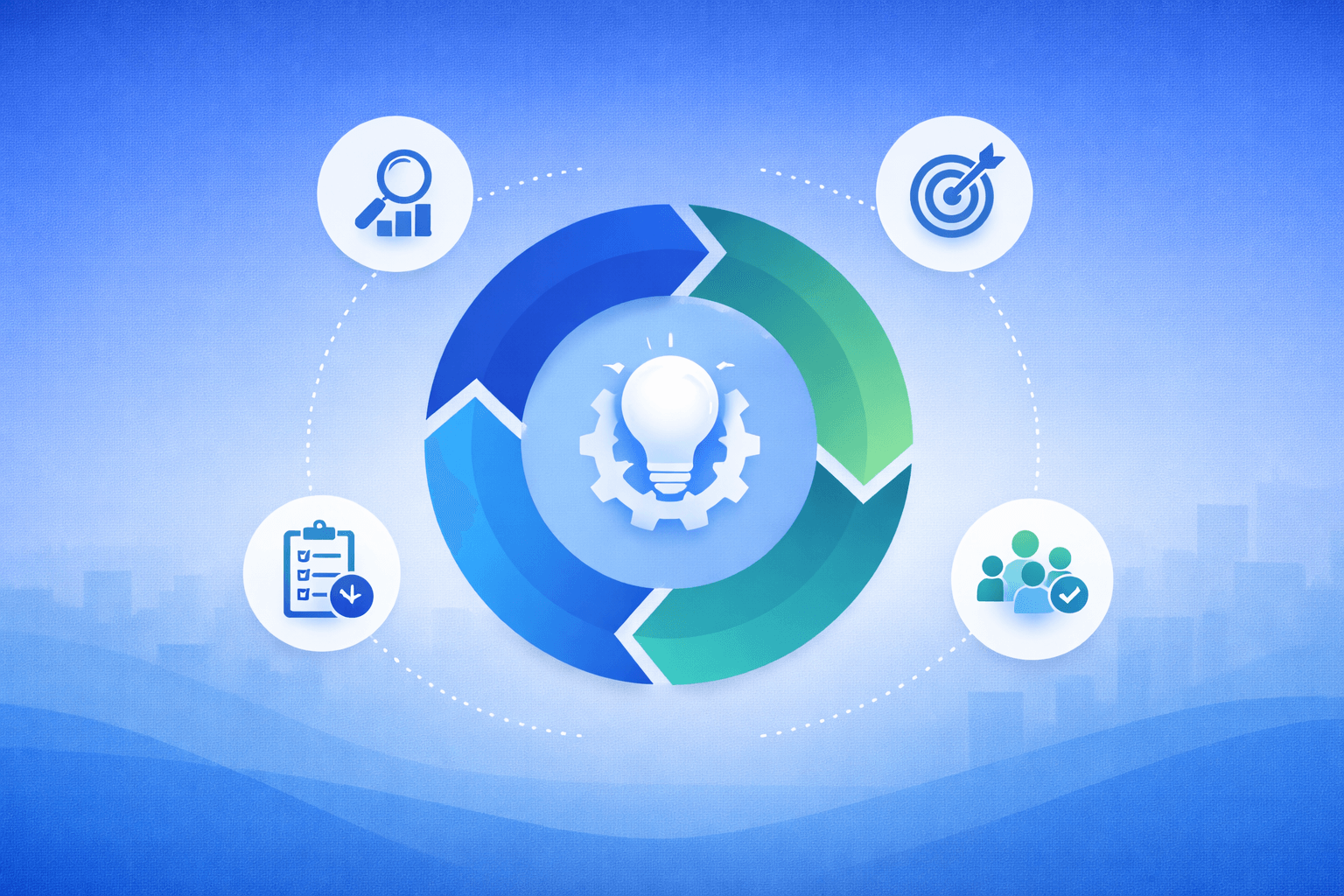
- Assess your current approach and identify gaps against leading practice
- Design a proportionate ERM approach tailored to your organisation
- Define risk appetite, governance structures and accountabilities
- Embed risk management through training and hands-on support
Ready to discuss enterprise risk management?
Contact us for a no-obligation consultation with one of our senior advisors.